For the best part of two years, Jaguar has been telling us that everything was about to change. There was the controversial brand relaunch. The now-famous “Copy Nothing” mantra. The Type 00 concept. The dramatic colours. The stripped-back branding. The inevitable outrage.
And through all of it came one question:
Where is the car?
Tonight – Tuesday 6 October 2026 – in New York, Jaguar finally answers it.
Meet the Jaguar Type 01, the first production car of the company’s new era and, the most important Jaguar in a generation.
It is big. It is bold. It is unapologetic. And whatever else you may think of it, nobody is going to mistake it for anything else.
That, surely, is the point.
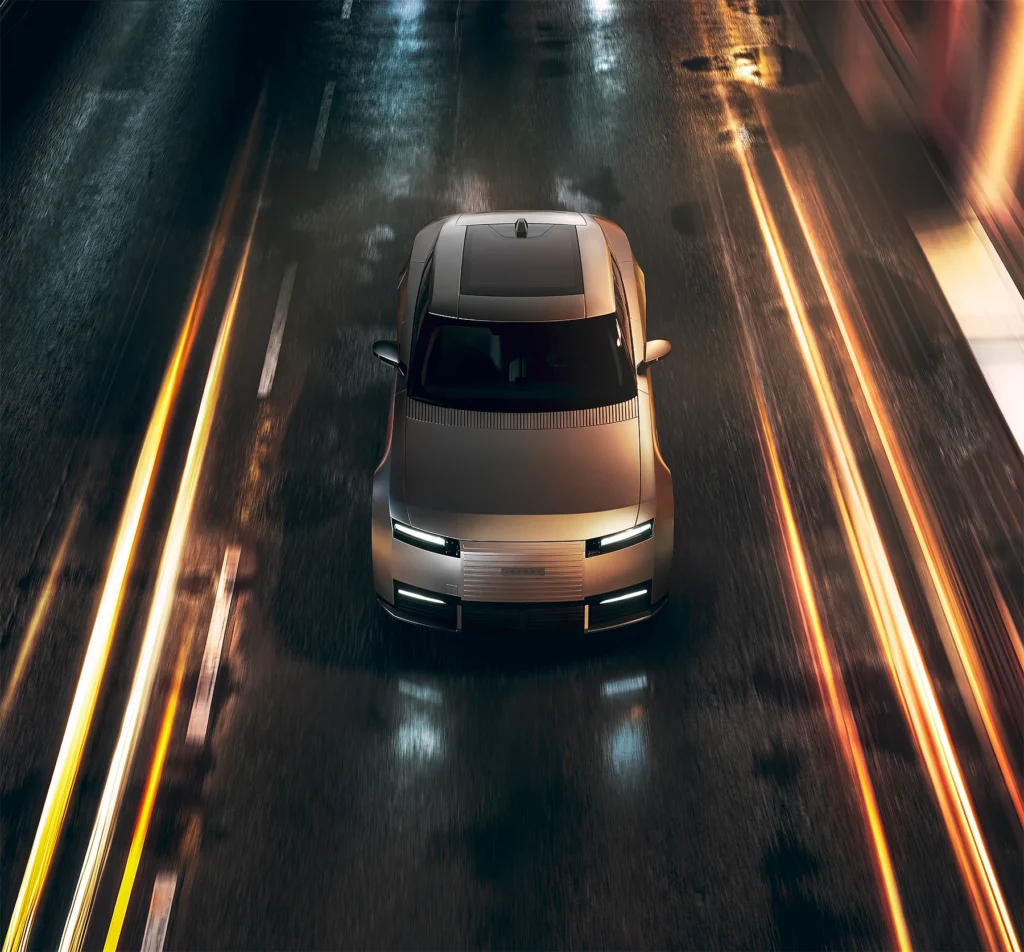
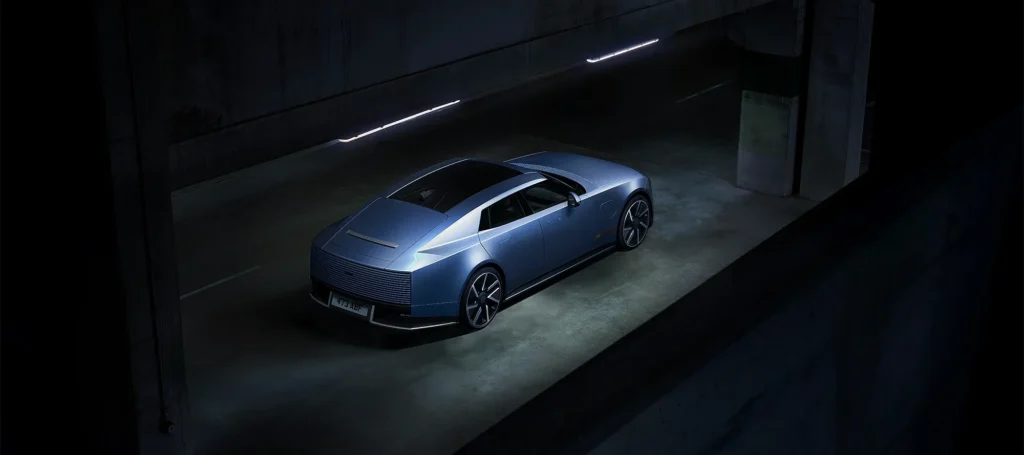
Jaguar calls Type 01 a “luxury four-door GT like no other”, the first production model created under its new “exuberant modernist” design philosophy. It sits on an entirely new Jaguar Electric Architecture, or JEA, developed specifically to allow the designers to create the proportions they wanted rather than simply wrapping a familiar body around an existing EV platform.
And those proportions are extraordinary.
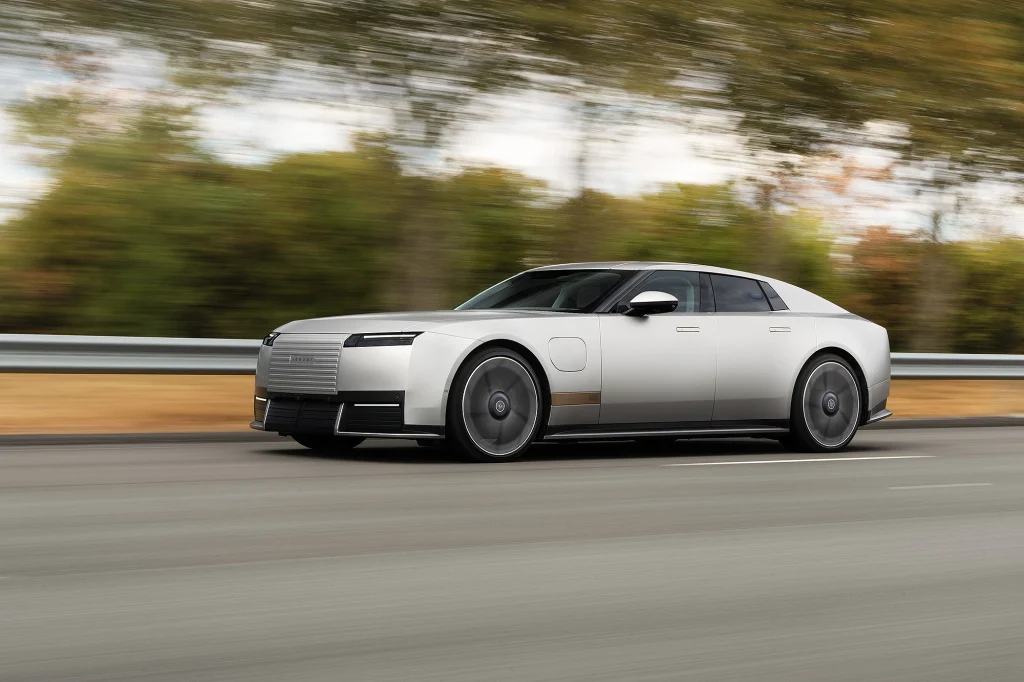
Type 01 is 5,235mm long but just 1,403mm tall. It has a long bonnet, short front overhang, extended rear deck and, as standard, enormous 23-inch wheels. Jaguar even talks about the “luxury gap”, the distance between the centre of the front axle and the front door, which measures 898mm and accounts for roughly 17 per cent of the car’s total length. Jaguar points out that proportionally, it is almost identical to the E-type.
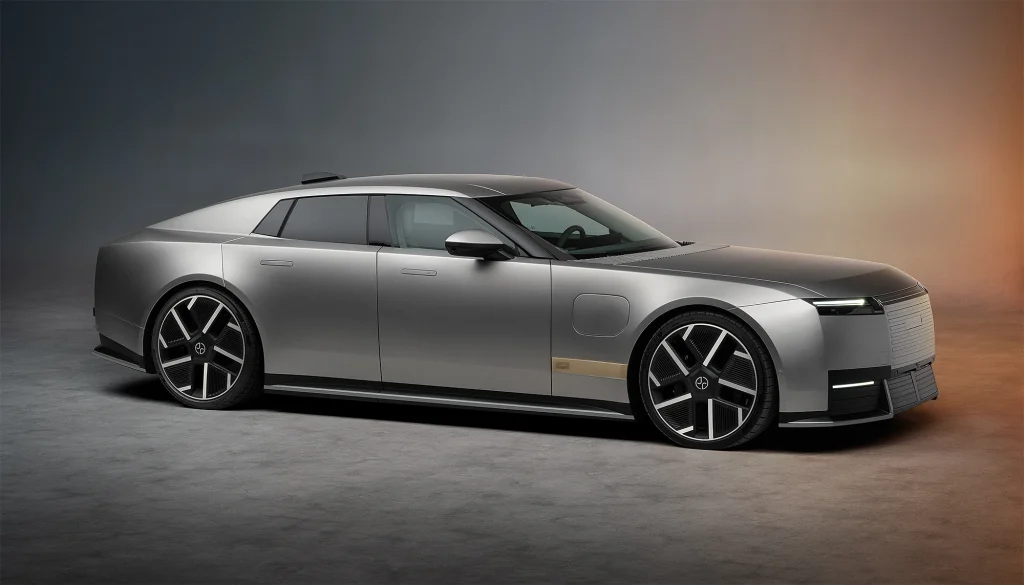
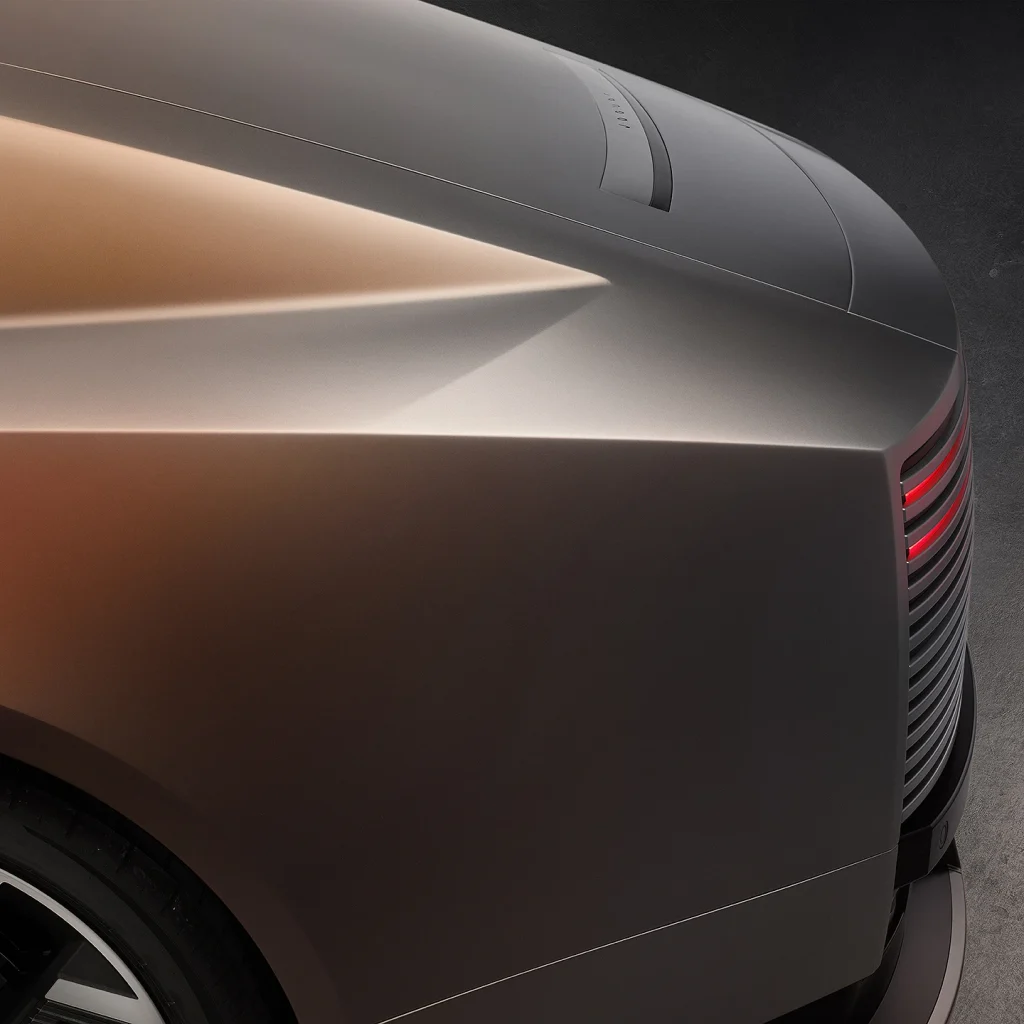
That does not mean Type 01 is trying to look retro. Quite the opposite. The new car is almost architectural in appearance. Huge, clean surfaces. Strong shoulders. A low glasshouse. A solid rear with no conventional rear window. Hidden lights. Horizontal “strikethrough” graphics. Nothing appears accidental.
Seen from behind, it looks less like a conventional saloon and more like something carved out of a single block of material. Jaguar describes the effect as “monolithic”. For once, the marketing department may actually be underselling it. The glassless rear is one of the most striking design choices. Rather than compromise the shape with a conventional rear screen, Jaguar uses a ClearSight camera system, with the rear-view display positioned within the full-width Panoramic Soundbar at the base of the windscreen. Rear visibility comes from external cameras rather than a piece of glass hanging from the roof. It is a perfect example of the philosophy behind the car: use technology to preserve the design, rather than allowing technology to dictate it.
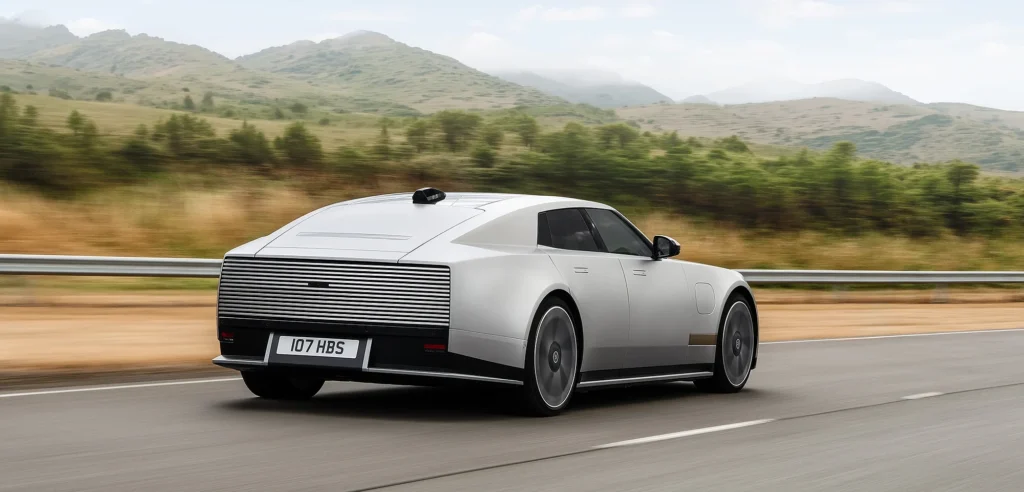
And aerodynamics have not been sacrificed in pursuit of theatre.
Jaguar says Type 01 has a drag coefficient of just 0.23Cd, making it the most aerodynamic Jaguar ever produced. More than 7,000 wind-tunnel tests helped shape the car, while active front vanes, a three-stage deployable rear spoiler and careful airflow management all contribute to efficiency. Jaguar even claims the rear bodywork generates a small amount of positive aerodynamic thrust rather than the low-pressure drag normally found at the tail of a car.
So yes, it looks outrageous. But there is serious engineering underneath it.
More than 1,000PS
Type 01 uses three electric motors, one at the front and two at the rear, producing up to 1,030PS and 1,365Nm of torque.
Jaguar quotes 0-62mph in 3.2 seconds, but the more revealing figure might be 62-112mph in just 4.0 seconds. That is Jaguar’s old philosophy of “power in reserve” translated into the electric age. The company says that at a steady 62mph, Type 01 is using only around two per cent of its available performance, leaving the overwhelming majority ready for instant acceleration when required.
The drivetrain is rear-biased, with Dynamic mode able to send up to 87% of the power rearwards. Intelligent Torque Vectoring, all-wheel steering and a 50:50 weight distribution are all intended to ensure this enormous GT behaves like a Jaguar rather than simply a very fast electric limousine.
The suspension is equally sophisticated, using double wishbones at the front, an integral-link rear arrangement, switchable-volume air springs and twin-valve active dampers. The suspension monitors the road 500 times every second and can alter damping 1,000 times per second.
And despite measuring more than 5.2 metres long, all-wheel steering gives Type 01 an 11.5-metre turning circle, which Jaguar says is comparable to a compact family car. Big car. Small-car manoeuvrability. Useful, because this thing has presence.
Range without apology
The battery is a substantial 118kWh usable pack, operating on an 850-volt architecture. Jaguar expects up to 450 miles WLTP range, or around 400 miles on the US EPA cycle. Even at a constant 75mph, Jaguar claims Type 01 can cover up to 320 miles on a charge.
Plug into a suitable 350kW DC charger and Jaguar says up to 200 miles of range can be added in approximately 13 minutes, with 10-80% taking around 22 minutes. The architecture can also exploit 250kW charging from 400-volt chargers, while AC charging is supported at up to 22kW. Interestingly, Type 01 has charging ports on both sides of the car. A small detail, but exactly the sort of small detail owners may end up appreciating every day.
Designed around the battery, not compromised by it
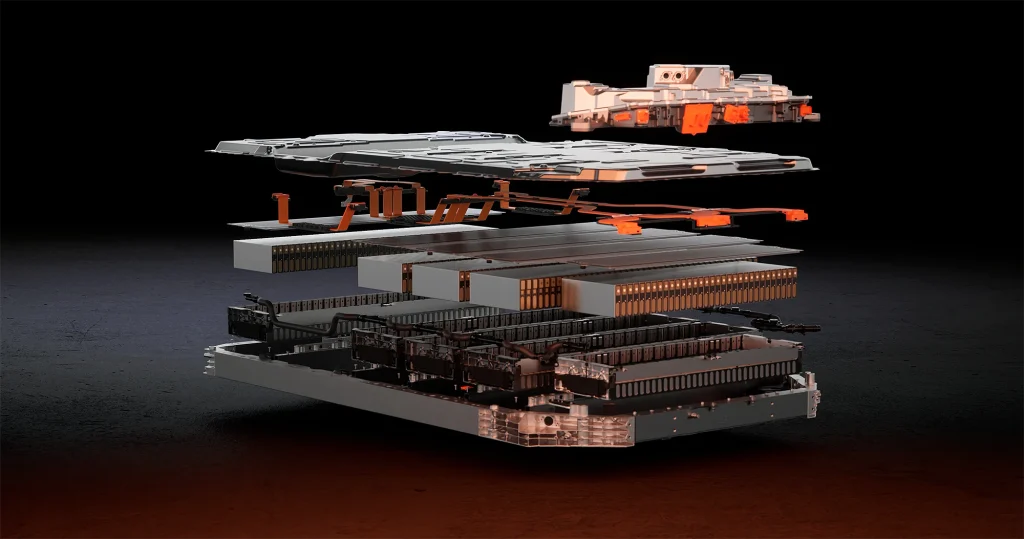
One of the most interesting elements of Type 01 is something most owners may never see. Jaguar has not simply placed a huge flat battery beneath the cabin and accepted the usual consequences.
Instead, the new JEA platform was engineered around the low roofline from the outset. The battery extends forwards ahead of the passenger compartment, while its underfloor section is split to create additional vertical space for rear passengers. Even the battery-cell connectors have been moved to the sides rather than the tops of the cells to save precious millimetres.
Jaguar says around 80 per cent of the pack’s overall height is actual energy storage. That packaging work helps explain how Type 01 manages to combine its remarkably low silhouette with genuine four-seat accommodation. It is clever engineering serving design rather than fighting it.
An interior that lowers its voice
If the exterior shouts, the interior whispers. The cabin is minimalist, but not austere.
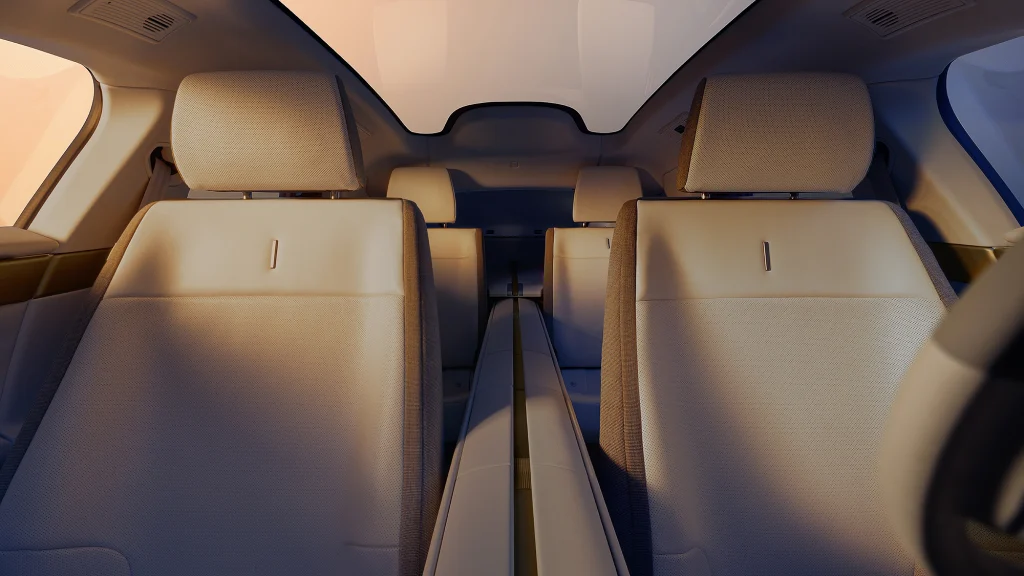
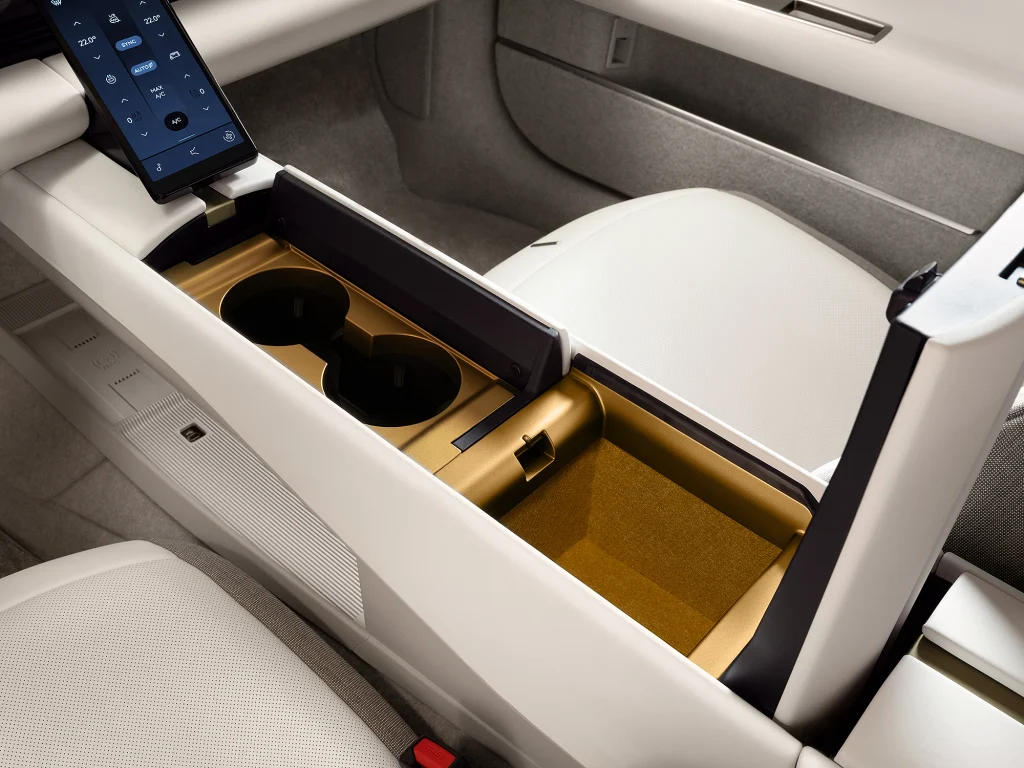
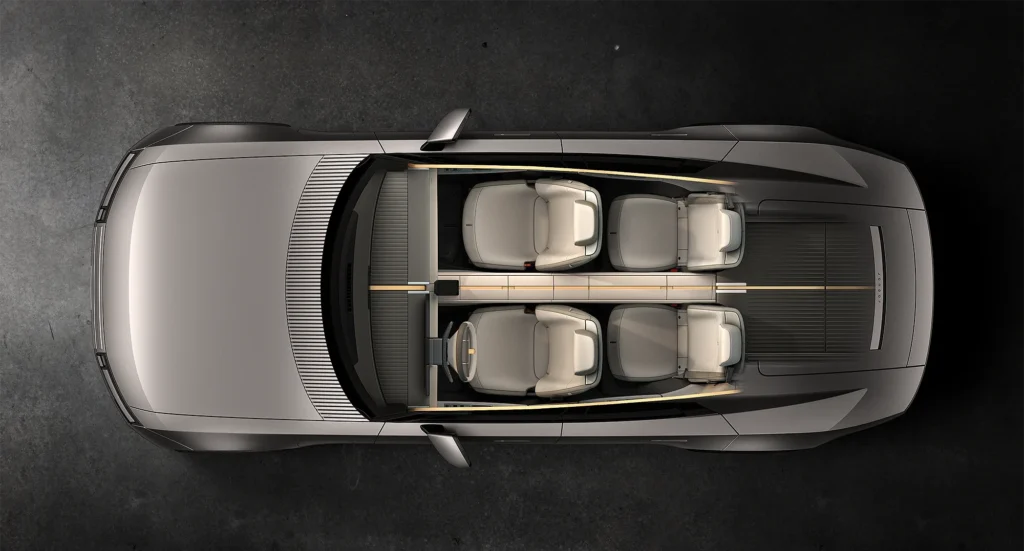
A dramatic central spine runs the length of the car, visually dividing the cabin into four individual spaces. Brass-effect detailing runs through the interior, while hidden storage, deployable air vents and concealed cupholders preserve the clean surfaces until they are needed.
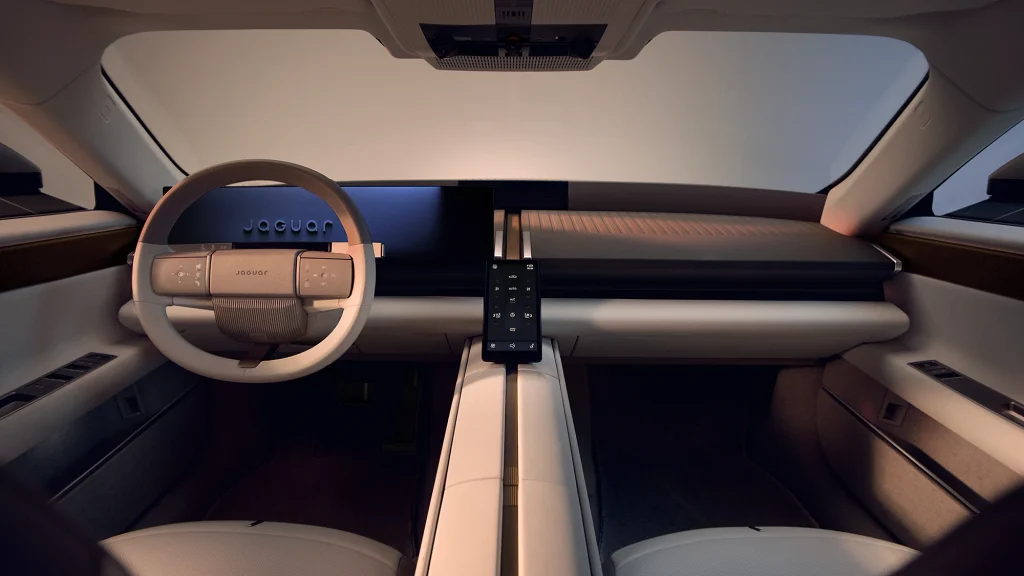
The driver gets a 24-inch OLED display, supported by a smaller seven-inch central screen for frequently used functions such as climate and audio controls. Rear passengers have their own seven-inch display integrated into the centre console.
The seats are heated and cooled front and rear, while the front seats add a “hot stone” massage function.
And despite all the design drama, Type 01 has not forgotten practicality. The rear seats split 50:50 and fold, expanding luggage space from more than 450 litres to around 1,000 litres.
That may come as a surprise to anyone familiar with some of Jaguar’s previous large luxury models.
Thirty-eight speakers. Because seventeen apparently wasn’t enough.
Then we come to the sound system.
Jaguar has worked with Meridian to create a 38-speaker Immersive Sound System, including a 13-speaker full-width Panoramic Soundbar across the base of the windscreen and another 25 speakers hidden throughout the cabin. The front seats also incorporate Sensory Audio, designed to physically transmit elements of the music through the seat itself. At which point my XF’s 17-speaker system suddenly starts to feel positively restrained.
The absence of conventional front door speakers also allows Jaguar to maintain those enormous uninterrupted interior surfaces. Again, technology serving the design.
Copy of Nothing
That phrase is worth returning to. When Jaguar relaunched its identity nearly two years ago, “Copy Nothing” became one of the most talked-about parts of the campaign. Many hated it. Many hated almost everything about the campaign. But everybody talked about Jaguar. And perhaps that was the point.
The phrase itself goes much further back than the campaign, rooted in Sir William Lyons’ philosophy that a Jaguar should be a copy of nothing.
Type 01 may be the purest modern expression of that idea yet. It does not look like an electric Porsche. It does not look like a Mercedes. It does not look like a Tesla. It does not particularly look like the Jaguar you already own. It looks like Type 01. And in a world where aerodynamics, legislation, shared architectures and market trends have pushed so many cars towards increasingly similar shapes, that may prove to be its greatest strength.
Will everybody like it? Absolutely not. Some will reject it because it does not resemble their idea of a traditional Jaguar. Others will reject it simply because it is electric. Some will look at the expected starting price and conclude that Jaguar has moved beyond them. All are legitimate reactions.
But Type 01 is not trying to please everybody. It is trying to make Jaguar desirable again. It is trying to make the marque culturally relevant again. And above all, it is trying to make a Jaguar unmistakable again.
Orders are expected to open in early 2027, with first customer deliveries anticipated during the second half of the year.
Whether Type 01 ultimately succeeds commercially remains to be seen. But tonight, in New York, Jaguar has finally placed its cards on the table. And one thing is already certain…
Nobody is going to accuse it of playing safe.
MARK BRIERLEY
Jaguar Breakfast Club
Wednesday 7 October 2026
0100 BST
From the author: There is so much more to say about Type 01. This is just a glimpse and I am sure we will write more, and talk much more about Type 01 over the coming days, weeks and months ahead.
- Exuberant proportions: Low roofline, short front overhang, long bonnet, extended rear overhang and 23-inch wheels. Presence and drama from every angle.
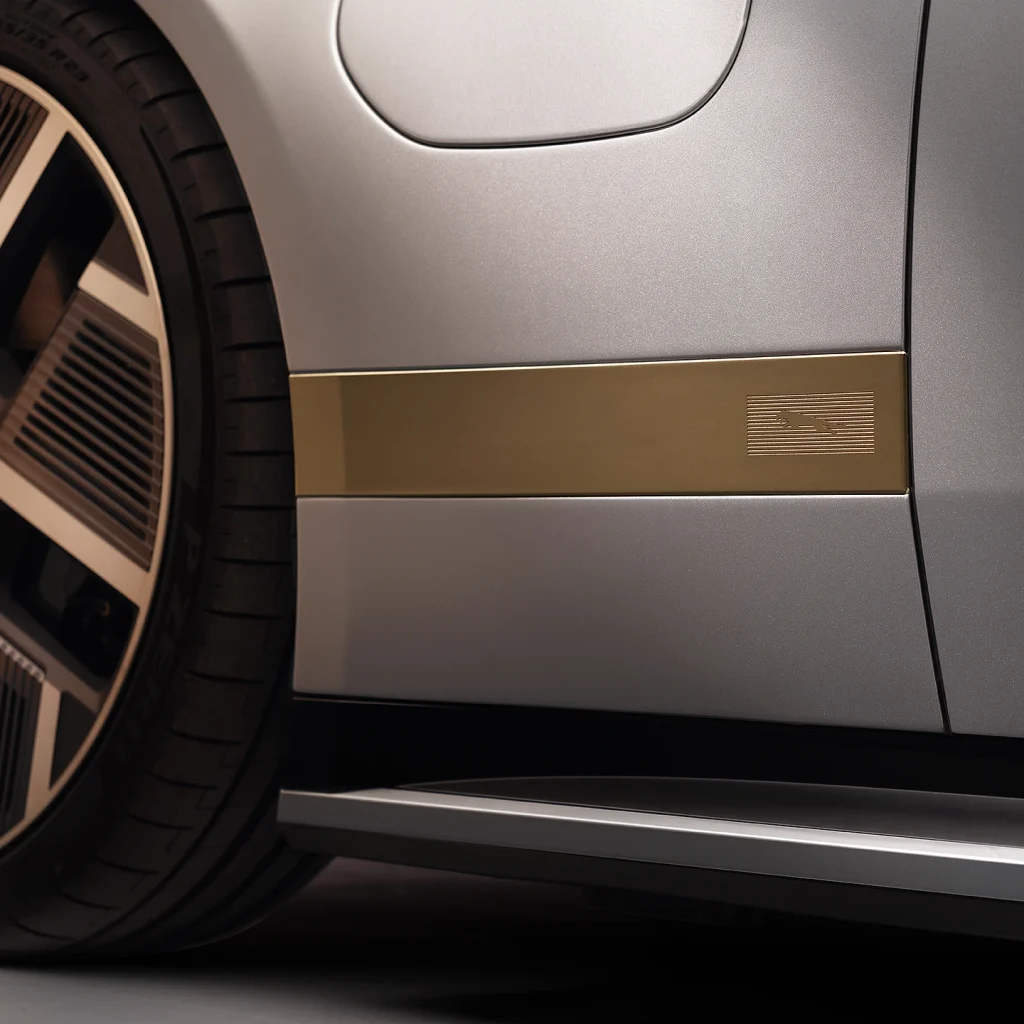
- The leaper: The exterior Fender Ingot with brass-effect finish accentuates Type 01’s proportions and long bonnet and features the laser-etched leaper.
- Most aerodynamic Jaguar: Active Vanes, three-stage deployable spoiler and airflow optimisation delivers drag co-efficient of 0.23Cd.
- Frameless doors: Patented new cant rail design uses compressed-radius hemming technique for an elegant transition from glass to body.
- Sculpted solidity: Horizontal strikethroughs, hidden rear lights, powerful shoulders and a solid tailgate create a monolithic presence.
- Slim headlights: Digital LED headlights are the slimmest ever fitted to a Jaguar (just 84mm high) each with 17,000 pixels.
- Exterior palette: Colour options show Type 01 in the very best light, including gloss and exquisite satin finishes.
- Chromatic Moments: Collection celebrates artistry and personal expression with unique badging and two hand-crafted paints. Limited to 60 examples globally.
- Central spine: Cabin is split into four individual spaces with anodised aluminium finishers running the length of the interior to emphasise Type 01’s scale.
- Hidden technology: ClearSight Rear View display, embedded in industry-first, full-width Panoramic Soundbar, replaces traditional mirror and is directly in driver’s eye-line.
- Curated colours: Interior is inspired by the layered tones of travertine stone and the play of light and shadow.
- Design Vision: Launch specification is truest expression of Jaguar design and purest Type 01 form, by those who created it.